West Pullman
West Pullman: A Resilient South Side Community with a Rich Industrial Past and Green Future
Welcome to West Pullman, a historically significant and enduring neighborhood on Chicago's far South Side. Initially settled by workers seeking to escape the strictures of the company town of Pullman, this community quickly grew into a diverse industrial hub. Today, West Pullman offers a unique blend of working-class heritage, solid homeownership, and surprising natural assets, poised for a new chapter of revitalization. If you're looking for a genuine Chicago experience with a strong sense of pride and an affordable urban lifestyle, West Pullman is a compelling place to call home.
A Past Shaped by Industry and Diverse Immigration:
Escaping the Company Town: West Pullman's story began in the 1880s as a haven for workers of the Pullman Palace Car Company who desired to own their own homes and live outside the paternalistic control of George Pullman's planned community. This quest for independence laid the groundwork for a self-reliant and community-oriented ethos.
Industrial Growth and a Cultural Mosaic: The area rapidly swelled with industrial workers drawn to factories like International Harvester and others recruited by the West Pullman Land Association. This boom attracted waves of immigrants from across Europe – including Germans, Scandinavians, Italians, Poles, Hungarians, and Lithuanians – each contributing to a vibrant cultural mosaic. They built churches and cultural centers, solidifying the neighborhood's diverse identity. The commercial corridor around Kensington (115th Street) became a notable Italian community, now evolving into a Hispanic enclave.
Resilience Through Deindustrialization: The closure of the Pullman Company in 1968 and subsequent deindustrialization dealt significant economic blows to West Pullman. The neighborhood also experienced a dramatic racial shift, transitioning from being nearly 100% white in 1960 to over 90% African American by 1980. Despite these challenges, West Pullman's residents have demonstrated remarkable resilience, holding onto a strong homeownership rate and a vibrant network of block clubs, churches, and community groups.
Real Estate in West Pullman: Accessible Homes and Investment in the Future
The real estate market in West Pullman offers accessible price points, a solid housing stock, and is benefiting from targeted revitalization efforts.
Affordable Homeownership: West Pullman boasts one of Chicago's higher homeownership rates (around 51%), reflecting its stable, family-oriented character. The neighborhood generally offers affordable housing options, making it attractive for first-time buyers. While recent data for the broader "Pullman" area (which includes West Pullman) may show some fluctuations in median home prices, properties often sell within a reasonable timeframe, with some even receiving multiple offers.
Solid Housing Stock: The housing stock primarily consists of single-family homes, often sturdy brick residences built in the early to mid-20th century. Many homes feature private yards and detached garages, adding to their appeal. There's also a mix of two-flats and multi-unit buildings. Recent private investments, such as new affordable senior housing developments, are also contributing to the housing landscape.
Targeted Revitalization: West Pullman is part of the city's INVEST South/West initiative, a strategy aimed at improving commercial corridors and enhancing quality-of-life amenities. The West Pullman Industrial Park TIF (Tax Increment Financing) district is also in place to support industrial investments, site remediation, and infrastructure improvements, all fostering job creation and economic vitality.
Amenities and Connectivity:
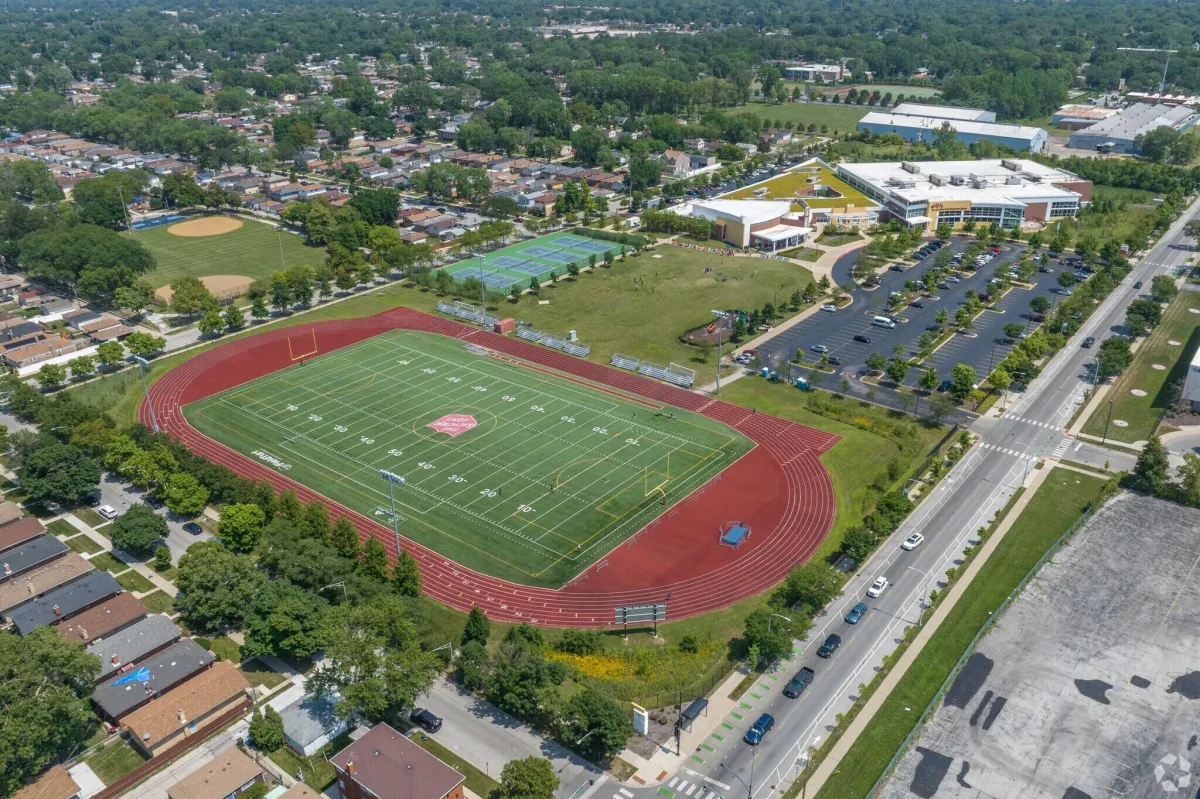
Parks and Natural Areas: West Pullman offers significant green spaces for residents. West Pullman Park is a major amenity, spanning over 16 acres and featuring an indoor swimming pool, two gymnasiums, sports fields, playgrounds, and even a natural savanna area – a remnant of the region's historic landscape. The Major Taylor Trail, a six-mile public trail for walking, running, and biking, runs through the neighborhood, connecting to other green spaces.
Community Resources and Retail: The Salvation Army Kroc Community Center, the largest community center in Illinois, is a significant asset nearby, offering extensive and affordable programs for all ages. While some industrial areas remain, the community also benefits from retail developments like Marshfield Plaza, providing brand-name shopping options.
Excellent Transportation: West Pullman is well-connected by public transportation, offering convenient commutes. Residents have easy access to the Metra Electric Main Line with stations in the broader area (like the updated 103rd and 111th Street stations in neighboring Pullman), providing direct rail service to downtown Chicago. Numerous CTA bus routes traverse the neighborhood. For drivers, easy access to I-57 and I-94 ensures efficient travel throughout the city and beyond.
West Pullman is a Chicago neighborhood defined by its proud industrial past, its diverse and resilient community, and its commitment to a revitalized future. Its affordable homes, abundant green spaces, and excellent transportation links make it a compelling and authentic place to call home on Chicago's South Side.
HOA: No
55+ Community: No
